NEW AND IMPROVED

This blog is now sugar FREE, fat FREE, gluten FREE, all ORGANIC and all NATURAL!!

Tuesday, December 28, 2021

Padiddle


Padiddle


The other night while driving to our bowling league, we passed a car with one headlight out.  I said to Mrs. C,

“That could be dangerous, looks like a motorcycle until you get close.”

“Yep; have you ever heard of a padiddle?”

“Padiddle?  You know about a padiddle? I thought that was just a local thing from way back when.”

“My mom used to call them out, if you call a padiddle you can make a wish.”

“When we saw one, you could kiss your girl, or if you were with a guy, you punched him on the arm. I haven’t heard the term in a zillion years.”

Later, of course, I Googled “Padiddle.”

Padiddle, alternatively spelled pediddle or perdiddle, is a Canadian and American slang term for a vehicle with a burnt-out headlight

Unfortunately, there is no official source or record that explains the exact meaning and origin of Padiddle. Its earliest appearances are in the 1940s, when mentions of the activity appeared in Archie comic strips...

Padiddle wasn’t originally a point-based family game, It was a way for young lovebirds who were driving around town to exchange kisses.

There are various padiddle rules, like yelling out “Padiddle” and punching the car roof or a window when you spot one.  The first to yell it out and punch the roof gets a point. Some people kept score earning points on a long trip. 

I think the game would be pretty boring today, I almost never see a car with a burned-out headlight.  It used to be quite common.  I guess they make headlights more long-lasting these days.

Maybe I just don’t notice like I used to.  I don’t need a padiddle to kiss Mrs. C.


Eh, What’s Up Doc


 Eh, What’s Up Doc

They’re quitting, that’s what’s up. 

I just read an article about healthcare workers leaving due to the stress and pressure of the Covid pandemic.  I see this myself  locally, and not just with front line hospital workers, it is effecting everyone in the industry.

My regular GP, over twenty years, recently closed his practice.  Except for the dreaded “bend-over exam” I  used to almost look forward to yearly visits with the doctor.  He was always upbeat, made jokes and took my ribbing back at him.  Also a damn good doctor from what I could tell.

A few months after the pandemic hit, much of his staff left, taking the unemployment benefits, and or just overworked and stressed out.  The doctor and what was left of his staff were no longer upbeat, but surly and dare I say cranky.  There was bad attitude in the office.

Several weeks after my last visit I received notice that the practice was closing.  I’m pretty sure the Doc had several years left before normal retirement age, except for what he went through with Covid. 

This was a GP, I can only imagine the extra stress of those in the hospital watching patient after patient suffer, needing to deal with their families, all while they were mostly helpless in defeating the virus.

It took several tries for me to find a new GP.  Doctors were not taking new patients. I did finally find one, and I do like him, but when Mrs. C needed an appointment, his practice was no longer taking new patients.

She did fine a practice that would take her, but I think the traditional doctor’s office will soon be replaced by medical factories where you get a different doctor every visit and nobody knows your name. 

The personal relationship between doctor and patient, where personalities and past history are important in care and diagnosis will soon disappear. 

It was probably on the way out anyway, but thank Covid for speeding the exit.  

Sunday, December 26, 2021

The Wizard of OZ, an allegory


The Wizard of OZ, an allegory


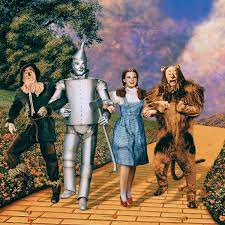
Mrs. C is a really big fan of “The Wizard of Oz.” There is a wall in one half of my man cave that I allow her to display her 20 different “Wizard of Oz” plates framing a poster of Dorothy and her three friends on the yellow brick road. 

I like the movie, so I allow the display.

This Christmas one station broadcast this movie in a loop all day long and Mrs. C stayed glued to that channel.  It reminded me of a visitor a few years back who had to explain the real meaning of the movie to us.

This sort of friend, then acquaintance and now stranger was invited to dinner one night as he was alone and Mrs. C has a way of taking in the lonely from time to time, a way which I have tried unsuccessfully to divert.

While showing this person our home he had to comment on the “Wizard of Oz” wall.

“You know of course, that the movie was really an allegory on the corruption of capitalism and the benefits of communism don’t you?”

“Why no, I/we don’t.”

He went on to explain how every part of the movie, the Capitalist bad witches, the Communist good witches, the false god of following the yellow brick road (gold you know) and the Wizard who represented Blah…Blah…Blah.  Everything had some inner meaning of battling economic ideals.

And I thought it was just some sweet movie of a little girl saving her dog from a nasty old crone.

There is a locker room saying, “some people could even ruin a wet dream.”  Not a very proper or descriptively pretty saying, but it does make a point.

This guy could sure ruin a good movie.

I’ve since done some research on the allegory of “The Wizard of Oz” and found several interpretations.

The silver slippers (They were silver in the original book, changed to ruby for the color in the movie)and yellow brick road represented some economic issues of the time the story was written.  There is the capitalism/communism interpretation, there is a farmer vs industrialization with the scarecrow representing the farmer, the tin man industry and the cowardly lion Williams Jennings Bryant.  Apparently some smart people can find a way to make this movie about anything they find to be important.

Seems to me that if a story is interpreted multiple ways, it is either a lousy allegory, or people are just looking for stuff that isn't there.  An allegory shouldn't slap you in the face, but it should be subliminally understood in one specific way, or what is the point?

Anyway...

I’ve always wondered with this or any story, does the author always have an underlying theme? (I know, theme and allegory not exactly the same, but close enough for this post.)

In school, English literary teachers always had the same question for every novel or play ever written, “What was the authors theme to this story?”

Does a story have to have a theme? 

Does an author really sit down and think,

“What story can I tell that will make people be nice to their neighbors and eat all their vegetables?”

I don’t think so.  I believe most authors think,

“Hey, I have an idea for a really good story!”

Anyway I did learn in my Literary/English courses in school that the answer to “What was the authors theme” was always,

“Man’s inhumanity to man!”  

I never really understood what that answer means, but it always got a “Very good” nod from my teachers.  

So what is the story of “The Wizard of Oz” really about?  

It seems really smart people can make it about almost anything. 

It could be another example of “Man’s inhumanity to man” or as Sigmund Freud once responded about the sexual significance of a cigar in a dream,

“Sometimes a cigar is just a cigar!”